On the rim of the Gran Cono: what you see up there
The crater left by the 1944 eruption, the fumaroles, the Valle del Gigante and, on clear days, the whole Bay of Naples. A guide to what to look for from the rim of Vesuvius.
3 min read Updated October 17, 2026
In short
- The Gran Cono trail leads from the car park at 1,000 m to the rim of the crater, inside Vesuvius National Park.
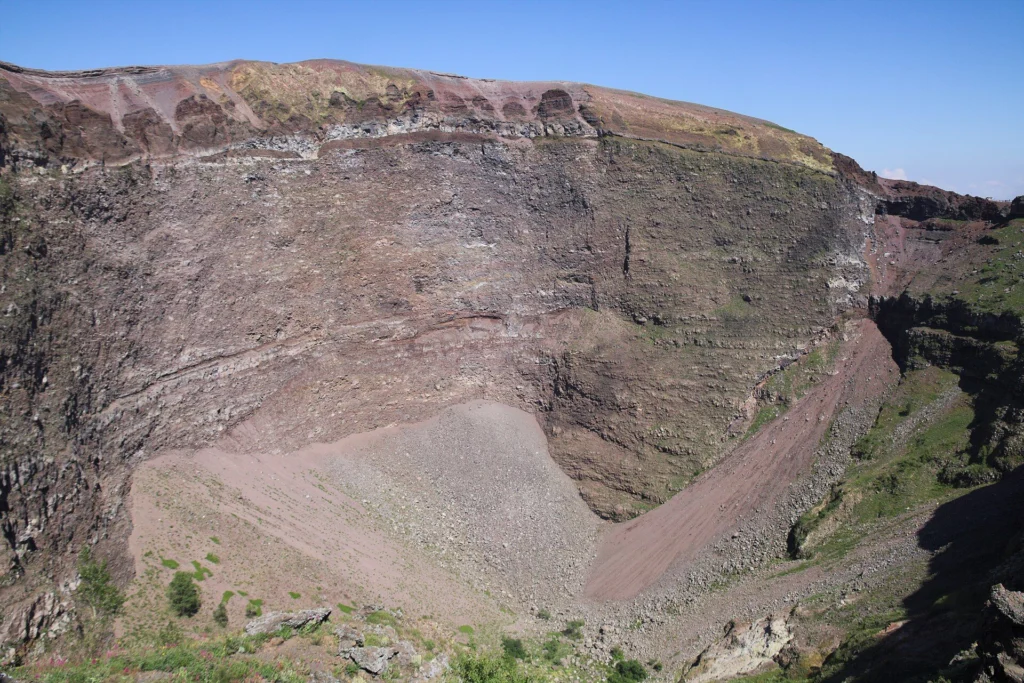
- The crater was left by the 1944 eruption: about half a kilometre across and more than 200 metres deep, with fumaroles still active.
- On clear days you can see the Bay of Naples, Capri, the Sorrento peninsula and the Campi Flegrei.
You ride the shuttle up to the car park at 1,000 metres, then walk up the Gran Cono trail, a wide track of earth and lapilli that winds around the cone. As you climb the landscape changes: vegetation thins out, the ground turns red and black, the bay opens out below you.
The crater
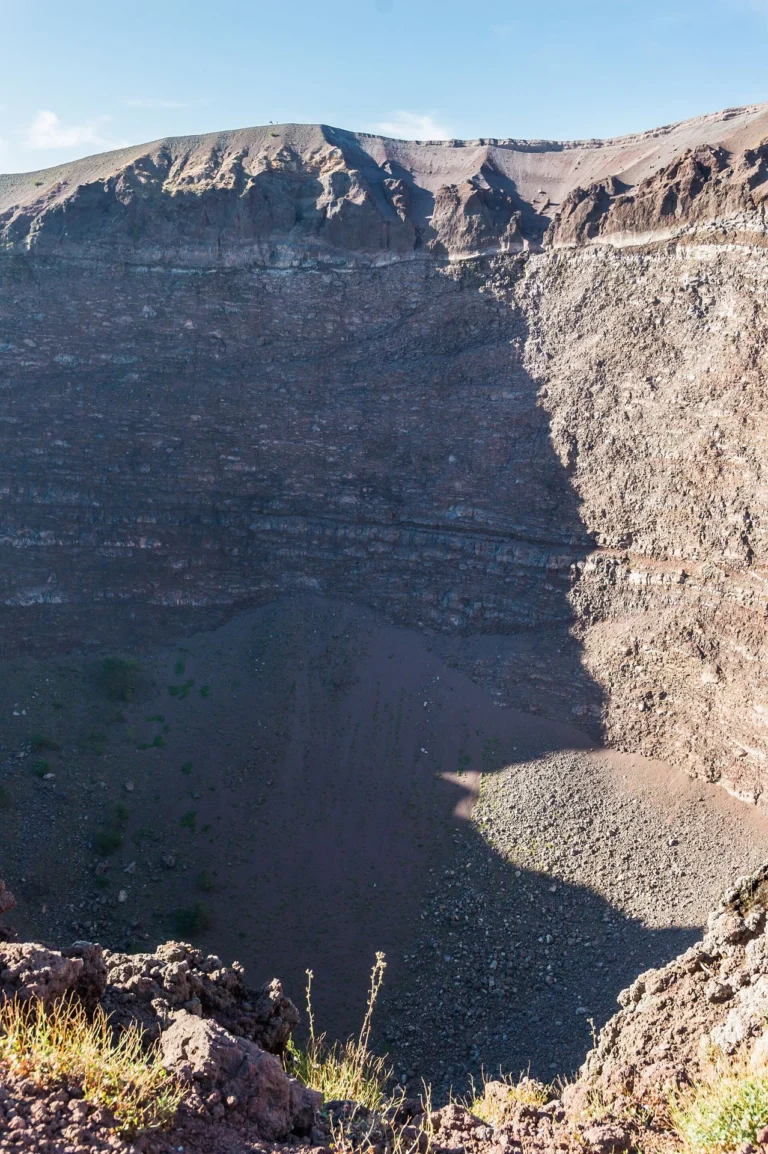
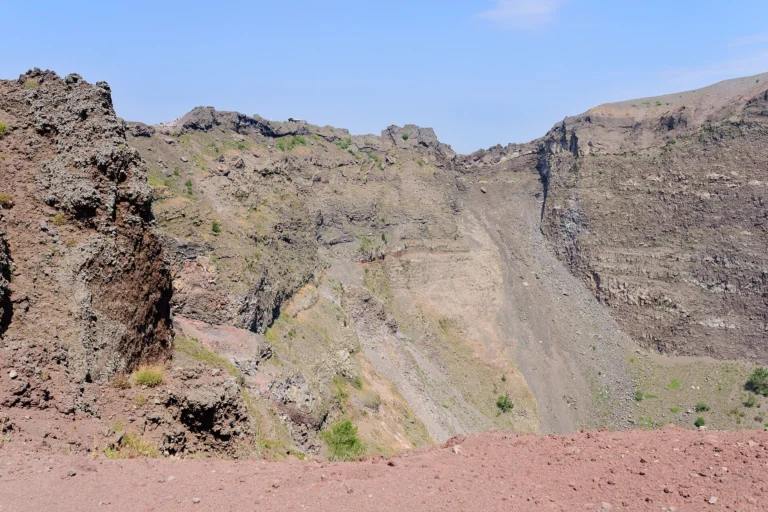
At the top you look into a huge funnel of rock. This is the crater left by the 1944 eruption: measurements vary slightly between sources, but it is about half a kilometre across and more than 200 metres deep. The walls show the layers of past eruptions, lava flows and ash deposits stacked like the pages of a book.
Look closely at the inner walls and you will see the fumaroles: puffs of steam rising from cracks in the rock. They are the sign that the volcano is at rest, not extinct. More on that in Vesuvius today: is it still an active volcano?.
Monte Somma and the Valle del Gigante
To the north, facing the Gran Cono, rises the ridge of Monte Somma: the rim of the ancient volcano inside which Vesuvius grew. Between the two peaks runs a crescent-shaped valley, the Valle del Gigante, divided into the Atrio del Cavallo and the Valle dell’Inferno, where the most recent lava flows can be seen.
The Bay of Naples
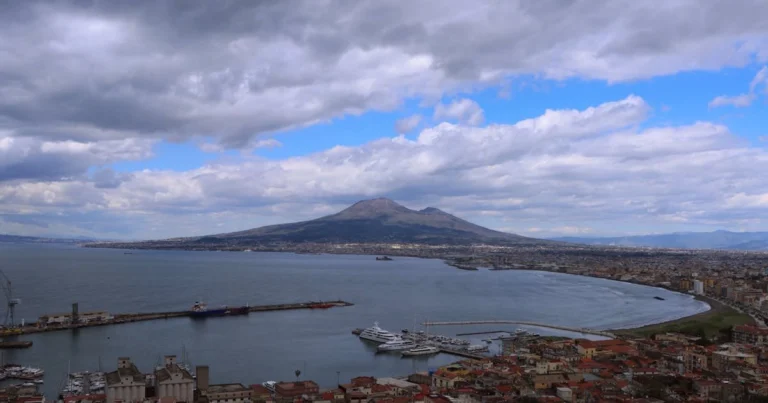
On clear days the view is one of the widest in Italy. Towards the sea you see Naples and its bay, the Sorrento peninsula and Capri; to the west the Campi Flegrei, Ischia and Procida; at the foot of the volcano the unbroken spread of Vesuvian towns, built right on top of the lava flows. With a little care you can also pick out the area of the Pompeii excavations.
The broom
On the lava flows grows a plant that turns the volcano yellow in late spring: broom (*ginestra*). Giacomo Leopardi, who stayed at Torre del Greco on the slopes of Vesuvius in the last years of his life, dedicated one of his most famous poems to it in 1836, “La ginestra, o il fiore del deserto”, as a symbol of those who endure in a fragile land.
Before you go
- The Gran Cono ticket has a time slot and is sold online only: it is already included with our “Shuttle + Gran Cono ticket”.
- Wear closed shoes with a good sole: the trail is volcanic gravel.
- At the top it is almost always windy and a few degrees cooler than in town: bring a sweater.
- The trail closes in strong wind or when there is a fire risk: check the Gran Cono status at the top of this site.